


Start With What You Already Know
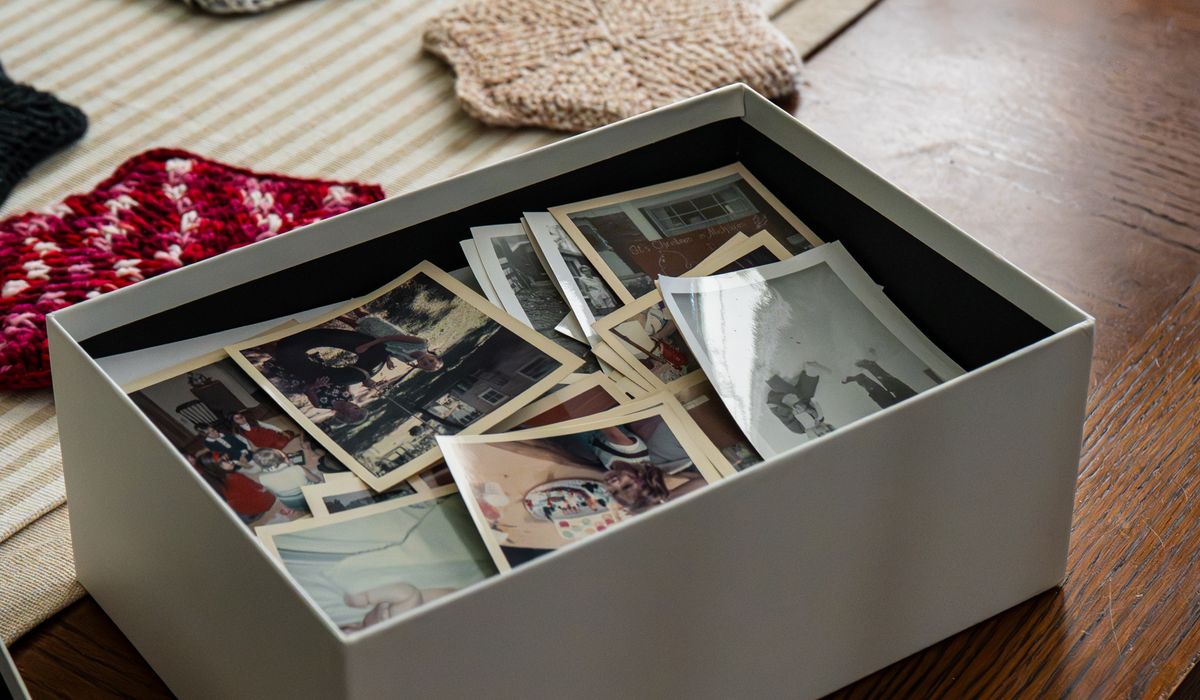
Every family history begins at the kitchen table rather than in an archive. Before you search a single record, gather everything your family already holds. Ask parents, grandparents, aunts, uncles and cousins what they remember, and ask them early — memories fade, and the oldest generation is the one you can still question.
Look for the paper trail that may be sitting in a drawer:
- Birth, marriage and death certificates, and any baptism or confirmation cards
- Photographs with names written on the back (and the ones without — show them to relatives and ask who is in them)
- Family bibles, birthday books, funeral orders of service and newspaper cuttings
- Wills, deeds, apprenticeship papers, military medals and discharge papers
- School reports, union cards, passports and old address books
Write down what you learn on a simple pedigree chart and a family group sheet. Record names in full, with nicknames in brackets: the "Aunt Polly" of family legend is very often a Mary or an Elizabeth. If a relative is willing, record the conversation — a twenty-minute chat can save you months of searching.
Work Backwards, One Generation at a Time
The most common mistake beginners make is jumping straight to a famous name or a sixteenth-century ancestor found in someone else's online tree. Resist it. Genealogy is built from the present backwards, and each generation must be proved before you move to the next.
Confirm at least two independent records for each person, then look for their parents. Where a name is common — think John Smith or Mary Jones — assumption is your enemy. Always check that the person in the record is the right age, in the right place, with the right occupation or spouse, before you accept them as yours.
Civil Registration: Births, Marriages and Deaths
From 1 July 1837 the state recorded births, marriages and deaths in England and Wales. Scotland began in 1855, and Ireland in 1864 (with non-Catholic marriages registered from 1845). These records are the backbone of nineteenth- and twentieth-century research.
The national indexes are searchable by name, and each entry gives you the year, quarter and registration district, plus a volume and page number — everything you need to order a certificate. Certificates carry a small fee, so be selective and start with direct ancestors.
- Birth certificates give the date and place of birth, the father's name and occupation, and the mother's name including her maiden name. From September 1911 the mother's maiden name also appears in the index itself.
- Marriage certificates give ages, addresses, occupations, both fathers' names and occupations, and the names of witnesses — witnesses are often relatives worth following up.
- Death certificates give age, cause of death, occupation and the informant, who is frequently a son, daughter or neighbour.
The Census, 1841 to 1921
A census has been taken every ten years since 1801, but names appear only from 1841. That first set is thin on detail: ages for adults over fifteen were rounded down to the nearest five years, and birthplace is recorded only as whether a person was born in the county. From 1851 onwards you get exact ages, relationships to the head of household, marital status, occupations and a specific parish of birth — which is gold dust for locating a baptism.
The 1921 census is now available, and the 1931 census for England and Wales was destroyed by fire, so the next release will be 1951. Use census returns to follow a household across decades, to spot children who died young, and to track moves between towns and into service in London or the industrial cities.
Before 1837: Parish Registers and Local Record Offices
Before civil registration, the parish church kept the records. Baptisms, marriages and burials survive from 1538 in principle, though many registers begin later. Bishops' transcripts, nonconformist registers and Roman Catholic records fill some gaps, and many are now indexed online.
For anything else, the county record office is your friend. These archives hold wills and probate papers, poor law and workhouse records, school log books, estate papers, tithe maps, electoral registers, quarter sessions and local newspapers. Central government records — military service, taxation, courts, and the censuses themselves — are held at The National Archives at Kew.
Plan a visit in advance: check opening hours, order documents beforehand where you can, take a pencil rather than a pen, and ask the archivists for guidance. Expect to wrestle with old handwriting, Latin in earlier documents, and dates before 1752, when the new year began on 25 March.
Keep a Research Log and Be Patient
For every record you consult, note the date, the source, the reference and what it told you — including what it did not tell you. Research logs stop you paying twice for the same certificate and help you see the gaps in your reasoning. Back up scans and photographs in more than one place.
Spelling was fluid for centuries, so search variants freely: Baker and Barker, Cholmondley and Chumley. Brick walls are normal; move sideways to a sibling or a neighbour and come back later. Genetic testing can help break a stubborn case, but it works best when it sits on top of a carefully documented tree. Start with one ancestor, one certificate, one careful step back — and enjoy the chase.


Leave a reply